
 Tiếng Việt
 English
As part of an operational cost optimization strategy, hot air fan systems in ceramic tile plants play a key role in reducing energy consumption. Recently, TOMECO Service successfully conducted an in-depth site survey and energy audit project, enabling the client to accurately identify energy loss points and establish an efficient, cost-saving, and sustainable operating roadmap.
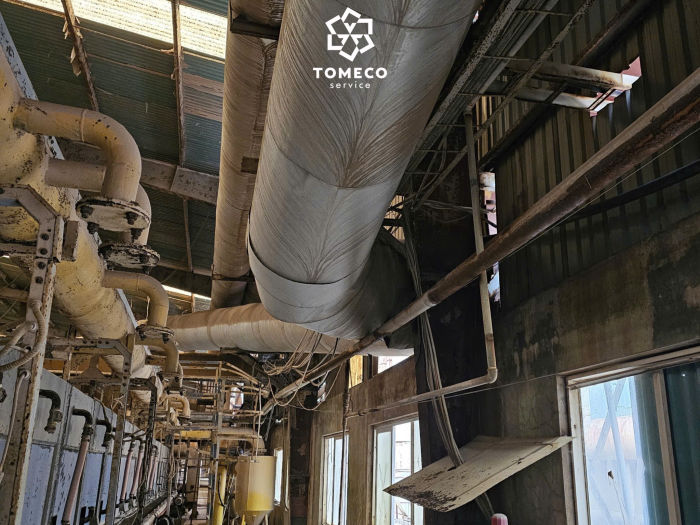
1. Background: The Energy Cost Challenge in the Ceramic Tile Industry
In ceramic tile production lines, drying and firing systems are the most energy-intensive areas, accounting for up to 60–70% of total plant operating costs. Hot air fan systems are responsible for distributing thermal energy and directly affect both product quality and fuel consumption.
However, after long-term operation, many fan systems face common issues such as:
Airflow and pressure no longer matching actual production capacity
Significant heat losses caused by abnormal pressure drops in duct systems
Fans operating far from their optimal efficiency range, leading to serious electrical energy waste
Facing the need to optimize costs and enhance competitiveness, a large ceramic tile manufacturer entrusted TOMECO Service to carry out a comprehensive survey and energy audit of its hot air fan system.
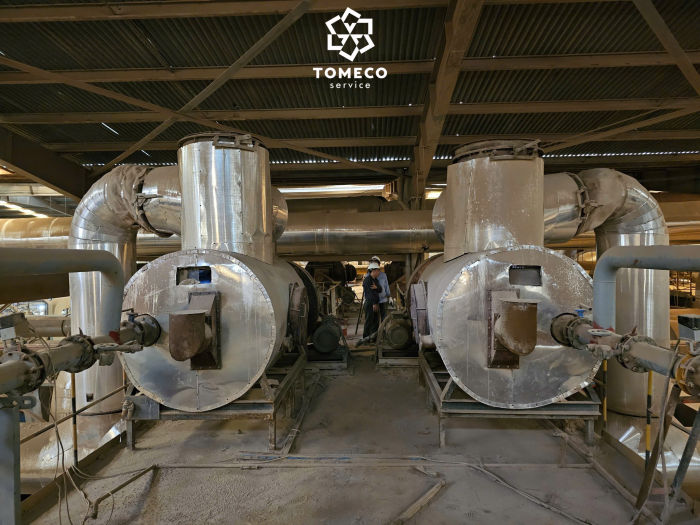
2. Technical Solution: On-Site Assessment and Energy Audit
TOMECO Service’s engineering team implemented a detailed assessment process to precisely identify energy loss sources.
On-Site Survey and Performance Measurement
Advanced measurement instruments were deployed to record actual operating parameters across the drying and firing lines:
Measuring hot air airflow and pressure at critical system nodes
Checking fan motor current and power consumption
Evaluating mechanical condition, vibration levels, and duct system sealing integrity

Loss Identification and Data Analysis
Based on the collected data, TOMECO experts performed in-depth analysis focusing on:
Fan efficiency: Comparing actual operating points with the fan’s Best Efficiency Point (BEP)
Duct system losses: Identifying pressure drop locations caused by dust accumulation or suboptimal duct design
Control capability: Assessing the effectiveness of Variable Frequency Drives (VFDs) in regulating operation according to real load demand
3. Results: Efficient – Cost-Saving – Sustainable Operation
The energy audit solution delivered by TOMECO Service generated tangible benefits for the ceramic tile plant:
Optimized operating parameters: Fan airflow and pressure were adjusted to precisely match the drying and firing process, ensuring consistent tile quality and reducing defect rates.
Outstanding energy savings: Fuel and electricity consumption were significantly reduced by eliminating pressure loss points and operating fans within their optimal efficiency range.
Improved operational stability: Early detection of potential mechanical failures enabled proactive maintenance, preventing unplanned kiln shutdowns.
Towards green manufacturing: Reduced greenhouse gas emissions through improved thermal efficiency, supporting the enterprise’s sustainability and ESG objectives.
Conclusion
The hot air fan system survey and energy audit project at the ceramic tile plant demonstrates TOMECO Service’s capability not only as a fan manufacturer but also as a comprehensive energy solution consultant. We are committed to accompanying Vietnamese enterprises on their journey toward optimized production, enhanced competitiveness, and long-term sustainable value creation.